Claude and the mabl MCP now build my test scenarios, merge conflicts included
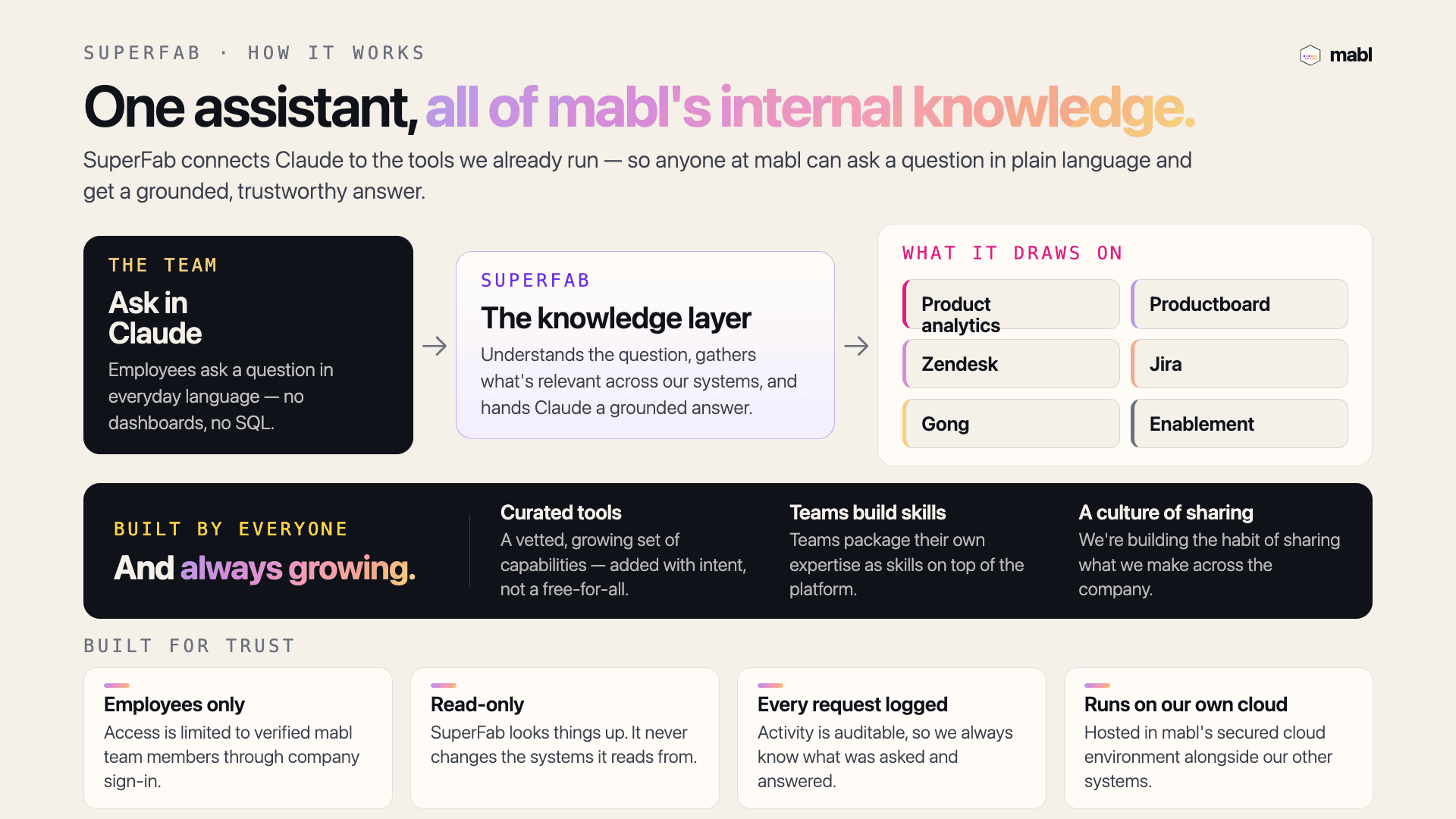
I use Claude with the mabl MCP to create mabl tests. A lot.
New CLI feature? Sure, I write the integration test. Then I also ask Claude to create a mabl test that proves the feature works for real.
This week I'm improving the flow merge page. To work on that page I need a merge conflict, and a merge conflict takes some setup. Create a test with a flow. Branch it. Edit the flow on the branch. Go back to master and change the same flow there. That's a lot of clicking just to reach the screen I want to fix.
So now I type "Claude, use mabl and do that for me!" My job is to fix the merge page, not to make merge conflicts by hand.
New CLI feature? Sure, I write the integration test. Then I also ask Claude to create a mabl test that proves the feature works for real.
This week I'm improving the flow merge page. To work on that page I need a merge conflict, and a merge conflict takes some setup. Create a test with a flow. Branch it. Edit the flow on the branch. Go back to master and change the same flow there. That's a lot of clicking just to reach the screen I want to fix.
So now I type "Claude, use mabl and do that for me!" My job is to fix the merge page, not to make merge conflicts by hand.